
Clean Affordable Energy
Advancing Inclusive Energy Access
Oct
Advancing Inclusive Energy Access in Rural Cameroon
How digital innovation, affordable solar solutions, and community partnerships can help build a future where no rural community is left behind.
Imagine a mother in rural Cameroon who wants her children to study after sunset but cannot afford reliable lighting. Imagine a small business owner whose working day ends early because electricity is unavailable, or a community health worker who must find alternatives when essential services depend on an unreliable power supply.
These are not simply stories about electricity. They are stories about opportunity, dignity, and the everyday decisions people make when access to essential resources is limited.
For a child, reliable lighting can create more opportunities to study. For an entrepreneur, suitable electricity can support productive activities. For a rural community, improved energy access can help strengthen education, healthcare, communication, and local economic development.
Yet millions of people across Africa continue to live without electricity.
According to the World Bank’s June 2026 update on Sustainable Development Goal 7, more than 560 million people in sub-Saharan Africa still lacked access to electricity, based on the latest available data. In Cameroon, the World Bank reported in January 2025 that approximately 75% of the rural population lacked electricity access at that time. These figures highlight the scale of the challenge, although they refer to different reporting periods.
Addressing this challenge requires more than expanding electricity generation. It requires solutions that reach underserved communities, reflect their financial realities, and remain useful and affordable over time.
This is the importance of inclusive energy access.
At Greenargy, a Digital Energy Platform founded in 2024 in Kumba, Cameroon, we believe that access to clean energy should not depend on where someone lives or how much money they can pay upfront.
Through digital innovation, flexible financing options, and community-driven distribution, we are working to make clean energy more accessible to rural households and businesses.
But advancing inclusive energy access is not the responsibility of one organization alone. It is a shared mission that requires governments, communities, businesses, financial institutions, development partners, and innovators to work together.
What Does Inclusive Energy Access Really Mean?
Inclusive energy access means ensuring that people can obtain and benefit from affordable, reliable, safe, and sustainable energy, regardless of their income, gender, or geographical location.
It goes beyond whether a community has an electricity connection.
A household may live near the national grid but struggle with connection costs or unreliable supply. Another may live far from existing infrastructure and depend on candles, kerosene lamps, or other alternatives.
In both situations, the real question is whether people can access the energy services they need to live, learn, work, and participate in society.
Inclusive energy access considers several interconnected factors:
- Availability: Are suitable energy solutions available where people live?
- Affordability: Can households and businesses obtain and use these solutions without unreasonable financial pressure?
- Reliability: Can people depend on their energy systems when they need them?
- Accessibility: Can customers discover, purchase, install, and maintain appropriate products?
- Equity: Are women, young people, low-income households, and remote communities included?
- Sustainability: Can solutions remain functional, financially viable, and environmentally responsible over time?
These dimensions matter because a solar product is not a complete solution if a household cannot afford it, cannot obtain technical support, or cannot replace a failed component.
The goal is not simply to put more equipment into communities. It is to ensure that people receive meaningful, lasting benefits from energy access.
Why Rural Cameroon Needs Inclusive Energy Solutions
Cameroon’s energy challenge reflects a wider development issue across sub-Saharan Africa: the people who are hardest to reach are often those with the greatest need for affordable and dependable energy.
Rural communities may face long distances between households, limited infrastructure, low and irregular incomes, and restricted access to financing and technical services.
Extending conventional electricity infrastructure remains essential, but it may not be the most immediate or cost-effective solution for every settlement.
The International Energy Agency identifies a combination of grid expansion and decentralized solutions, including standalone solar systems and mini-grids, as important to expanding electricity access across Africa. Its 2025 report also emphasizes the need for greater investment and financing to make universal access achievable.
For rural Cameroon, this means pursuing approaches that complement national electrification efforts while responding to the realities of individual communities.
1. Helping Children Learn Beyond Daylight
Education is one of the clearest reasons to make reliable lighting more accessible.
When a household lacks dependable electricity, children may have difficulty reading, completing assignments, or preparing for examinations after sunset.
A suitable solar reading lamp can provide an alternative to kerosene lighting, helping children study without requiring a household grid connection.
Access to electricity can also support digital learning, device charging, and the use of educational technologies where internet connectivity and other necessary resources are available.
Of course, lighting alone cannot solve every educational challenge. Children also need qualified teachers, learning materials, safe study environments, and supportive families and communities.
But energy is an important part of the picture.
When communities gain access to suitable and affordable lighting, they gain another opportunity to support learning and educational participation.
For Greenargy, this connection between energy access and opportunity is central to our mission. We believe children in underserved rural communities deserve the opportunity to benefit from clean, reliable lighting, regardless of their family’s income or location.
2. Supporting Rural Businesses and Livelihoods
Across rural Cameroon, small businesses sustain families and contribute to local economies.
Farmers, shopkeepers, tailors, food vendors, artisans, and other entrepreneurs often depend on energy to operate equipment, communicate with customers, preserve certain products, and extend their working hours.
When electricity is unavailable or unreliable, business owners may face additional expenses and limits on what they can produce or sell.
Appropriate solar energy systems can help some businesses power lighting, charge devices, support communications, and operate selected equipment, depending on the system’s capacity.
These benefits are not automatic. Entrepreneurs need solutions suited to their actual energy requirements, as well as financing, installation, maintenance, and practical guidance.
This is why inclusive energy access should be connected to local economic development.
Energy providers must understand how people earn a living, what equipment they need, how much they can afford, and which solutions can deliver practical value.
At Greenargy, we see rural households and businesses not simply as customers, but as participants in a wider clean-energy ecosystem.
Our ambition is to make it easier for them to discover suitable products and connect with financing and local distribution services that can help bring those solutions within reach.
3. Creating Opportunities for Women and Young People
The clean-energy transition should not leave women and young people on the sidelines.
Women are central to household well-being, agriculture, commerce, and community development. Yet they may face additional barriers to obtaining finance, technical training, business opportunities, and energy technologies.
Inclusive energy access creates an opportunity to address these barriers from two directions.
First, affordable energy can support women’s businesses, household activities, and access to information and communication technologies.
Second, the energy sector can provide opportunities for women and young people to develop technical skills, establish enterprises, and participate in distribution, installation, maintenance, and customer support.
Women should not be viewed only as recipients of clean-energy services. They can also be technicians, entrepreneurs, innovators, and leaders in their communities.
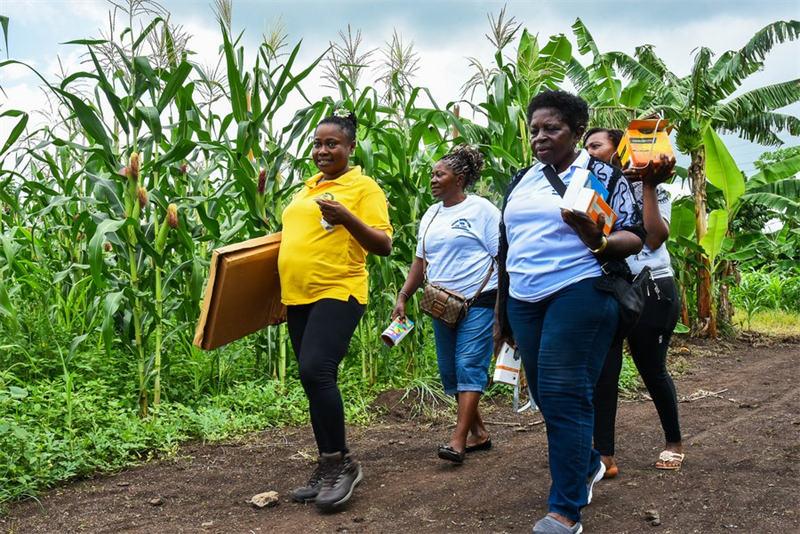
Greenargy is committed to supporting women’s participation in community-based solar distribution and the wider green economy.
Our reported work includes training 39 female technicians, reflecting our commitment to developing local capacity and creating opportunities for women in the clean-energy sector.
As our work expands, partnerships and further training can help strengthen these pathways.
The broader objective is to create an energy transition in which access to clean energy and access to economic opportunity advance together.
4. Improving Household Safety and Well-Being
For households that depend on kerosene lamps and other polluting lighting alternatives, access to suitable solar lighting can offer practical benefits.
Replacing kerosene lighting can reduce exposure to its fumes and lower certain fire and burn risks associated with open flames and fuel handling.
Reliable electricity also supports essential services beyond the home. Health facilities need power for lighting, communications, refrigeration, and appropriate medical equipment.
In communities where electricity supply is limited, appropriately designed solar systems and other decentralized solutions can help support selected services, provided they have adequate capacity and reliable maintenance.
It is important to recognize that different needs require different solutions. A small solar lamp may improve household lighting, but it cannot power an entire health facility.
Inclusive energy access therefore requires matching technologies to real needs rather than assuming that one product can solve every problem.
5. Advancing Digital Inclusion
Access to electricity is increasingly connected to participation in the digital economy.
Mobile phones, computers, internet routers, and other connected devices all require power. Without reliable electricity, people may find it difficult to charge devices, participate in online learning, access digital financial services, or communicate consistently.
For a rural entrepreneur, a charged phone can be an important business tool. For a student, electricity can support access to digital educational resources. For a household, reliable power can make it easier to use communication and payment services.
Yet digital inclusion requires more than electricity alone. Internet connectivity, affordable devices, digital literacy, and accessible services are also essential.
This is why energy access and digital inclusion should be considered together.
At Greenargy, we believe that ending energy poverty is a necessary step toward more meaningful digital inclusion.
As a Digital Energy Platform, Greenargy works at the intersection of clean energy, digital access, financing, and community distribution.
Our approach is designed to help underserved communities discover energy products, explore payment options, and connect with local services.
We believe digital innovation can make energy access more responsive and accessible when it is combined with community knowledge, reliable products, and practical support.
The Biggest Barrier: Making Clean Energy Affordable
One of the most important challenges facing rural households is the upfront cost of clean-energy products.
A family may understand the value of a solar lighting system but be unable to pay the full price immediately. A small business may need a larger system but lack access to suitable credit.
This is not necessarily a lack of demand. It may be a mismatch between the cost of available solutions and the financial realities of the people who need them.
The International Energy Agency’s 2025 report on electricity access in Africa identifies affordability and limited financing as important obstacles to achieving universal access. It calls for increased investment across electricity infrastructure and decentralized solutions.
Addressing affordability requires different approaches for different customers.
Flexible financing
PAYGo financing can allow eligible customers to make payments over time rather than paying the entire purchase price upfront.
Rent-to-Own arrangements can offer another route to ownership, depending on the contract terms.
These models need transparent pricing, clear payment conditions, realistic affordability assessments, and appropriate customer protections.
Mobile money payments
Where available, mobile money can make it more convenient for customers to make payments without travelling long distances.
Digital payment options can also support more accessible transactions between customers and energy providers.
Community-based distribution
Local agents can help customers understand available products, compare options, ask questions, and connect with relevant services.
For rural households, having a trusted point of contact nearby can make the process of adopting and maintaining clean-energy products easier.
Appropriate product choices
Not every household needs the same system.
Some may need a reading lamp. Others may need household lighting and phone charging, while a business may require a more powerful system.
Helping customers choose products suited to their needs and budgets is an important part of responsible energy access.
At Greenargy, we bring these considerations into our Digital Energy Platform model through digital product discovery, flexible financing options, mobile money payments, community solar agents, and customer support.
Our objective is to help make clean energy more accessible without overlooking affordability, customer needs, or long-term service quality.
How Digital Innovation Can Strengthen Rural Energy Access
Digital platforms cannot replace electricity infrastructure, local expertise, or physical distribution networks. However, they can help connect these elements and make energy services easier to navigate.
Consider the journey of a rural household seeking a solar lighting solution.
The family needs to understand which products are suitable, how much they cost, whether payment options are available, where to obtain them, and how to access support if something goes wrong.
A well-designed digital energy platform can help organize this journey.
Discovery: Customers can explore available products and learn about their features and intended uses.
Financing: Suitable customers can learn about available payment options and their terms.
Distribution: Digital systems can help connect customers with local agents and product delivery services.
Support: Customers can access information and connect with installation, maintenance, or after-sales services.
Learning and accountability: With appropriate consent and privacy safeguards, providers can use operational information to identify service gaps, understand customer needs, and improve delivery.
These capabilities can help energy providers serve customers more effectively, particularly when digital services are combined with local support for people who have limited internet access or digital literacy.
This is the wider opportunity behind energy digitalization: not simply moving a transaction online, but connecting people, products, services, and information into a more accessible system.
Greenargy: Advancing Inclusive Energy Access from Rural Cameroon
The global conversation about energy access often focuses on infrastructure investment, national electrification targets, and renewable-energy capacity.
These are essential priorities. But the success of the energy transition also depends on how effectively solutions reach individual households, small businesses, and underserved communities.
This is where locally grounded models can make a contribution.
Founded in 2024 in Kumba, Cameroon, Greenargy is a Digital Energy Platform working to transform how underserved communities discover, finance, access, and manage clean-energy solutions.
Our approach brings together digital innovation and community-based delivery to address practical barriers facing rural customers.
Our work includes:
- Digital product discovery: Helping customers explore clean-energy products and solutions through our online platform.
- Flexible financing options: Promoting PAYGo and Rent-to-Own arrangements to help make suitable products more attainable.
- Mobile money payments: Supporting convenient payment options where available.
- Community solar agents: Developing a local distribution network to bring product information and access closer to underserved households.
- Installation and maintenance support: Connecting customers with services that help them use and maintain their energy systems.
- Women’s participation: Creating opportunities for women to develop skills and participate in community-based clean-energy distribution.
Greenargy has reported reaching more than 65,000 people through its activities and establishing a solar distribution presence in two villages. Our reported training of 39 female technicians is another part of our work to strengthen local capacity.
These are company-reported figures, and we recognize the importance of maintaining supporting records and distinguishing people reached from households connected or receiving a specific energy service.
Impact is not only about how many people a programme reaches. It is also about whether customers obtain suitable products, whether systems continue to function, whether energy remains affordable, and whether communities experience meaningful benefits.
As we grow, strengthening impact measurement will help us better understand our contribution and identify where improvements are needed.
Our ambition for 2030
Greenargy’s ambition is to reach one million people and establish 10 additional solar distribution hubs by 2030.
We also aim to expand our community solar agent network, create green jobs, develop innovative financing solutions, and strengthen partnerships that advance clean-energy access.
We understand that achieving this ambition will require more than expanding sales or increasing the number of products distributed.
It will require investment, dependable technology, local participation, appropriate financing, strong partnerships, and a commitment to learning from the communities we serve.
Our vision is a future where geography and income no longer determine whether a rural family can access clean energy.
We see Greenargy’s role as contributing to this wider mission by connecting digital infrastructure with practical, community-driven energy solutions.
Building an Inclusive Energy Future Requires Partnerships
Rural energy poverty is too complex for any single organization to solve alone.
Governments, utilities, renewable-energy companies, financial institutions, technology providers, development organizations, impact investors, and community leaders all have important roles to play.
Progress depends on bringing their strengths together.
Governments and public institutions can support rural electrification plans, enabling policies, and coordination between grid expansion and decentralized energy solutions.
Renewable-energy manufacturers and technology providers can help improve access to reliable products, technical training, warranties, and after-sales support.
Financial institutions and impact investors can provide appropriate capital and support financing models that make clean energy more accessible to underserved customers.
Development partners and grant makers can support community programmes, women’s economic empowerment, local capacity building, and evidence-based approaches to expanding energy access.
Telecommunications and digital-service providers can help strengthen connectivity and digital payment infrastructure.
Community organizations and local leaders can help identify needs, build trust, and ensure that energy solutions reflect local priorities.
For Greenargy, these partnerships are important to extending our reach and strengthening the long-term sustainability of our model.
We welcome opportunities to collaborate with organizations that share our commitment to affordable clean energy, digital inclusion, women’s participation, and rural development.
Partnerships can support product access, financing, training, distribution, technology, and the measurement of meaningful outcomes.
The objective is not simply to scale an individual organization. It is to help build a stronger ecosystem in which more communities can access and benefit from clean energy.
Measuring What Matters: Beyond Products and Connections
A successful energy-access initiative should be evaluated by more than the number of solar products sold or the number of people reported as reached.
These measures can be useful, but they do not always show whether people have obtained reliable, affordable, and lasting energy services.
A more complete approach considers questions such as:
- Are households and businesses obtaining products appropriate to their needs?
- Can customers afford the initial cost and ongoing payments?
- Do installed systems continue to function as expected?
- Can customers access maintenance and after-sales support?
- Are women and young people gaining meaningful training and employment opportunities?
- Are energy solutions helping businesses undertake productive activities?
- Are customers satisfied with their experience?
- Are batteries and other equipment managed responsibly at the end of their useful lives?
For Greenargy and its partners, these questions can help strengthen accountability and improve future programmes.
Reliable data also helps funders, investors, public institutions, and communities understand what is working, where gaps remain, and how resources can be used more effectively.
Inclusive energy access must be measured not only by how far solutions travel, but also by the quality and durability of the benefits they deliver.
Inclusive Energy Access and the Sustainable Development Goals
Advancing inclusive energy access contributes directly to Sustainable Development Goal 7, which calls for affordable, reliable, sustainable, and modern energy for all.
It also supports wider development priorities.
SDG 1 — No Poverty: Energy can support livelihoods, enterprise development, and productive activities.
SDG 4 — Quality Education: Reliable lighting and electricity-enabled technologies can support learning.
SDG 5 — Gender Equality: Inclusive energy programmes can expand women’s access to energy, training, and economic opportunities.
SDG 8 — Decent Work and Economic Growth: Energy distribution, installation, maintenance, and related services can support green jobs and entrepreneurship.
SDG 9 — Industry, Innovation and Infrastructure: Digital platforms and decentralized energy solutions can help improve access to infrastructure and services.
SDG 13 — Climate Action: Appropriate renewable-energy technologies can contribute to reducing reliance on certain polluting energy alternatives.
These connections show why inclusive energy access should be treated as a development priority rather than solely a technical or commercial activity.
Energy can help unlock opportunities across multiple sectors, but these benefits depend on solutions that are affordable, reliable, and suited to local needs.
The Way Forward: Leaving No Rural Community Behind
Cameroon has an opportunity to advance electricity access through a combination of infrastructure investment, decentralized renewable energy, innovative financing, and stronger local distribution networks.
Real progress will depend on ensuring that these solutions reach people who have historically been underserved.
That means listening to communities, understanding their energy needs, designing realistic payment options, supporting local entrepreneurs, and investing in reliable services.
It also means recognizing that clean energy is part of a larger development picture.
A household needs more than a solar product to thrive. Children need education, businesses need markets, communities need infrastructure, and people need opportunities to participate in economic and social life.
Energy access can support these goals, but it must work alongside other essential services and development efforts.
At Greenargy, we believe that digital innovation and community-driven distribution can help make clean energy more accessible to rural households and businesses.
We are building our work around a simple conviction: the benefits of the energy transition should not be reserved for people living in cities or those who can afford large upfront payments.
Every community deserves a fair opportunity to benefit from clean, reliable, and affordable energy.
The challenge is significant, but so is the opportunity to create a more inclusive future.
Join Greenargy in Advancing Inclusive Energy Access
Closing the energy gap in rural Cameroon will require collaboration, investment, innovation, and a shared commitment to leaving no community behind.
At Greenargy, we are working to digitize energy access by connecting underserved communities with clean-energy products, flexible financing options, community solar agents, and customer support.
We invite renewable-energy companies, manufacturers, technology providers, financial institutions, impact investors, grant makers, development organizations, and community leaders to work with us.
Whether through funding, technology partnerships, product distribution, technical training, financing solutions, or community-based initiatives, there are practical ways to contribute to this mission.
If your organization believes that geography and income should not determine whether a family can access clean energy, we invite you to connect with Greenargy.
Together, we can help expand access, create opportunities for local participation, and advance a cleaner and more inclusive energy future for Cameroon and beyond.
Visit to learn more about Greenargy and explore opportunities to collaborate.
Greenargy — A Digital Energy Platform advancing inclusive energy access.
Digitizing Energy Access. Connecting underserved communities to a cleaner, more inclusive energy future.
