
Clean Affordable Energy
Inclusive Energy Access
Oct
Inclusive Energy Access: Ensuring No Community Is Left Behind in the Clean Energy Transition
Introduction: Energy Access Is More Than Electricity
Imagine a child trying to complete homework after sunset under the dim light of a kerosene lamp. Imagine a small business owner unable to preserve products, operate essential equipment, or serve customers after dark. Imagine a rural health facility struggling to provide reliable services because electricity is unavailable or unaffordable.
For millions of people living in underserved communities, these are not distant possibilities. They are everyday challenges that limit education, economic opportunity, healthcare, and quality of life.
Electricity is more than a source of light. It is an essential foundation for human development, economic inclusion, and a sustainable future. Yet access to reliable, affordable, and clean energy remains unequal, particularly in rural communities where conventional energy infrastructure is limited and the cost of available alternatives can be prohibitive.
This is why inclusive energy access must become a central priority in the global energy transition.
At Greenargy, a Digital Energy Platform, we believe that everyone deserves the opportunity to benefit from clean energy, regardless of where they live or how much they earn. Achieving this vision requires more than installing solar panels. It requires rethinking how energy solutions are discovered, financed, delivered, installed, and maintained, especially for communities that traditional energy systems have struggled to reach.
What Is Inclusive Energy Access?
Inclusive energy access means ensuring that individuals, households, businesses, schools, healthcare facilities, and entire communities can access energy solutions that are reliable, affordable, safe, and environmentally sustainable.
It recognizes that energy poverty is not experienced equally. A household in a remote village may face different barriers from a business in a growing town. A low-income family may be unable to afford the upfront cost of a solar system, even when the long-term savings would benefit them. Women entrepreneurs may lack access to financing, technical training, or the distribution networks needed to participate in the clean energy economy.
An inclusive approach addresses these differences rather than assuming that one solution will work for everyone.
It considers five essential dimensions:
- Availability: Energy solutions must reach communities that are underserved or disconnected from reliable electricity infrastructure.
- Affordability: Households and businesses need payment options that reflect their financial realities, including flexible financing where appropriate.
- Reliability: Energy systems must provide dependable service, supported by installation, maintenance, and after-sales assistance.
- Sustainability: Energy solutions should reduce dependence on polluting fuels and support a cleaner, more resilient future.
- Participation: Communities should have opportunities to shape energy solutions, develop technical skills, create businesses, and participate in the energy transition.
True inclusion means making clean energy accessible and ensuring that people have the resources, support, and opportunities to benefit from it.
Why Inclusive Energy Access Matters
1. Empowering Education and Learning
Access to electricity can transform the learning environment for children and young people.
In households without reliable electricity, students may struggle to study after sunset, while schools may lack the power needed for digital learning, computers, lighting, and other essential educational resources.
Solar reading lamps and other off-grid energy products can provide a practical way to improve study conditions, particularly in communities where grid connections are unavailable or unreliable.
Reliable electricity can also help schools access digital educational resources and enable teachers to use technology more effectively.
However, inclusive energy access must go beyond making products available. Families need solutions they can afford, and students need safe, dependable lighting that supports their education.
When clean energy reaches underserved households, it helps create an environment in which children can learn, develop their potential, and pursue opportunities beyond the limitations of their circumstances.
2. Strengthening Small Businesses and Local Economies
For small businesses, access to reliable electricity can be the difference between limited operations and sustainable growth.
Tailors, food vendors, shopkeepers, farmers, artisans, and other local entrepreneurs often depend on energy for lighting, refrigeration, communication, equipment, and customer service.
When electricity is unreliable or expensive, business owners may lose working hours, incur additional fuel costs, or miss opportunities to expand.
Affordable solar solutions can help businesses reduce their dependence on costly and polluting energy alternatives, depending on their energy needs and the suitability of the system.
Energy access can also create opportunities for new enterprises. Solar product distribution, installation, maintenance, and customer support can generate local economic activity while bringing essential services closer to communities.
Inclusive energy access is therefore not simply about connecting people to electricity. It is also about enabling them to use energy productively, increase their economic resilience, and build more sustainable livelihoods.
3. Advancing Gender Equality and Women’s Economic Empowerment
Women and girls must be central participants in the clean energy transition.
In many underserved communities, women carry significant responsibilities for household energy management and may face additional barriers to accessing finance, technical education, productive equipment, and business opportunities.
When energy solutions are inaccessible or unaffordable, these barriers can reinforce existing inequalities.
Inclusive energy access creates opportunities to change this reality.
Affordable clean energy can support women-led businesses, improve household activities, expand access to digital tools, and reduce dependence on traditional fuels. Meanwhile, training women as solar technicians, entrepreneurs, sales agents, and community energy leaders can open pathways to employment and financial independence.
Women should not be viewed only as beneficiaries of clean energy initiatives. They should also be recognized as skilled professionals, business owners, decision-makers, and leaders in the energy sector.
At Greenargy, we believe that community-based energy distribution can help bring these opportunities closer to underserved populations, including women and young people.
Building a more inclusive energy system means ensuring that women have a meaningful role in designing, delivering, and benefiting from energy solutions.
4. Improving Healthcare and Community Well-Being
Reliable electricity is essential for healthcare delivery.
Health facilities need power for lighting, refrigeration, communications, medical equipment, and other critical services. In communities where electricity is unavailable or unreliable, healthcare workers may face significant challenges in delivering consistent care.
Appropriate solar energy systems can help support essential electricity needs, particularly in facilities beyond the reach of reliable grid infrastructure.
At the household level, transitioning away from polluting fuels can also reduce exposure to harmful smoke and improve the environment in which families live.
These benefits depend on selecting suitable technologies, ensuring proper installation, and maintaining systems over time.
Inclusive energy access must therefore consider not only whether a community receives an energy product, but also whether that solution meets its needs safely and reliably.
5. Supporting Climate Action and Environmental Sustainability
Many underserved communities depend on kerosene lamps, diesel generators, and other conventional fuels when cleaner alternatives are unavailable or unaffordable.
Expanding access to suitable solar energy solutions can help reduce reliance on these fuels and support the transition towards cleaner energy systems.
Solar technologies can also strengthen community resilience by providing decentralized energy options in areas where grid expansion is difficult, costly, or slow.
However, the environmental benefits of the energy transition depend on responsible product selection, installation, maintenance, and end-of-life management.
An inclusive transition must ensure that communities facing the greatest barriers to energy access are not excluded from the benefits of climate action.
Climate solutions should create opportunities for people, protect the environment, and contribute to a more equitable future.
The Barriers Preventing Inclusive Energy Access
Despite growing interest in renewable energy, several challenges continue to prevent underserved communities from accessing suitable solutions.
The upfront cost of clean energy
Even when solar energy can offer long-term savings, the initial cost of purchasing and installing a system may be beyond the reach of low-income households and small businesses.
The challenge is not always a lack of willingness to adopt clean energy. Sometimes, it is the absence of a payment option that matches a customer’s financial circumstances.
Limited access to financing
Traditional financing may require collateral, formal income documentation, or credit histories that many rural households and informal businesses cannot provide.
Without appropriate financing mechanisms, potentially valuable energy solutions remain inaccessible to people who need them most.
Last-mile distribution challenges
Many underserved communities are located far from conventional retail outlets, technical service providers, and established distribution networks.
Transport costs, limited product availability, and difficulties accessing qualified installers can increase the cost and complexity of delivering energy solutions.
Limited technical support and after-sales service
Installing a solar system is only one part of the process.
Customers also need appropriate product guidance, professional installation, maintenance, repairs, and access to trustworthy support when problems arise.
Without these services, customers may lose confidence in renewable energy technologies or experience avoidable disruptions.
Limited awareness and information
Potential customers may not know which products are suitable for their needs, how different systems compare, what financing options are available, or how to identify reliable suppliers.
Access to clear information is essential for making informed decisions and building trust in the clean energy market.
Fragmented energy markets
Finding products, comparing options, securing financing, arranging delivery, and obtaining technical support can involve multiple disconnected providers.
This fragmentation can create additional costs and make the customer experience unnecessarily difficult.
Overcoming these barriers requires an integrated approach that connects technology, finance, distribution, customer education, and local expertise.
How Digital Innovation Can Make Energy Access More Inclusive
Digital technology offers new opportunities to improve how clean energy solutions reach underserved communities.
Rather than relying exclusively on conventional retail channels, digital energy platforms can connect customers, suppliers, financing options, technical professionals, and distribution networks through a more coordinated experience.
When designed around the needs of underserved communities, these platforms can help address several persistent challenges.
Making energy solutions easier to discover. Digital platforms can help customers explore available products, understand their features, and compare solutions according to their needs and budgets.
Expanding access to flexible financing. Appropriate digital payment systems and financing partnerships can help make energy solutions more accessible to customers who cannot afford the full upfront cost.
Connecting communities to local energy agents. Community-based distribution networks can bring product information, customer support, and energy services closer to households and businesses.
Improving access to installation and maintenance. Digital coordination can help customers connect with qualified technicians and access support throughout the life of their energy systems.
Building trust through information. Clear product descriptions, transparent pricing, guidance, and customer support can help people make more informed purchasing decisions.
Digital innovation is not a substitute for physical infrastructure, reliable products, skilled technicians, or community engagement. It is an enabling tool that can connect these essential elements and make energy access more efficient and inclusive.
The greatest opportunity lies in combining digital infrastructure with local knowledge, practical financing, and community-driven delivery.
Community-Driven Distribution: Bringing Clean Energy Closer to the People
Inclusive energy access requires solutions that reflect the realities of the communities they are designed to serve.
Local energy agents and community-based distribution networks can play a vital role in bridging the gap between clean energy providers and underserved customers.
Because these agents operate closer to the communities they serve, they can help households understand available technologies, identify suitable products, navigate purchasing decisions, and access local support.
This approach can also create opportunities for local employment and entrepreneurship.
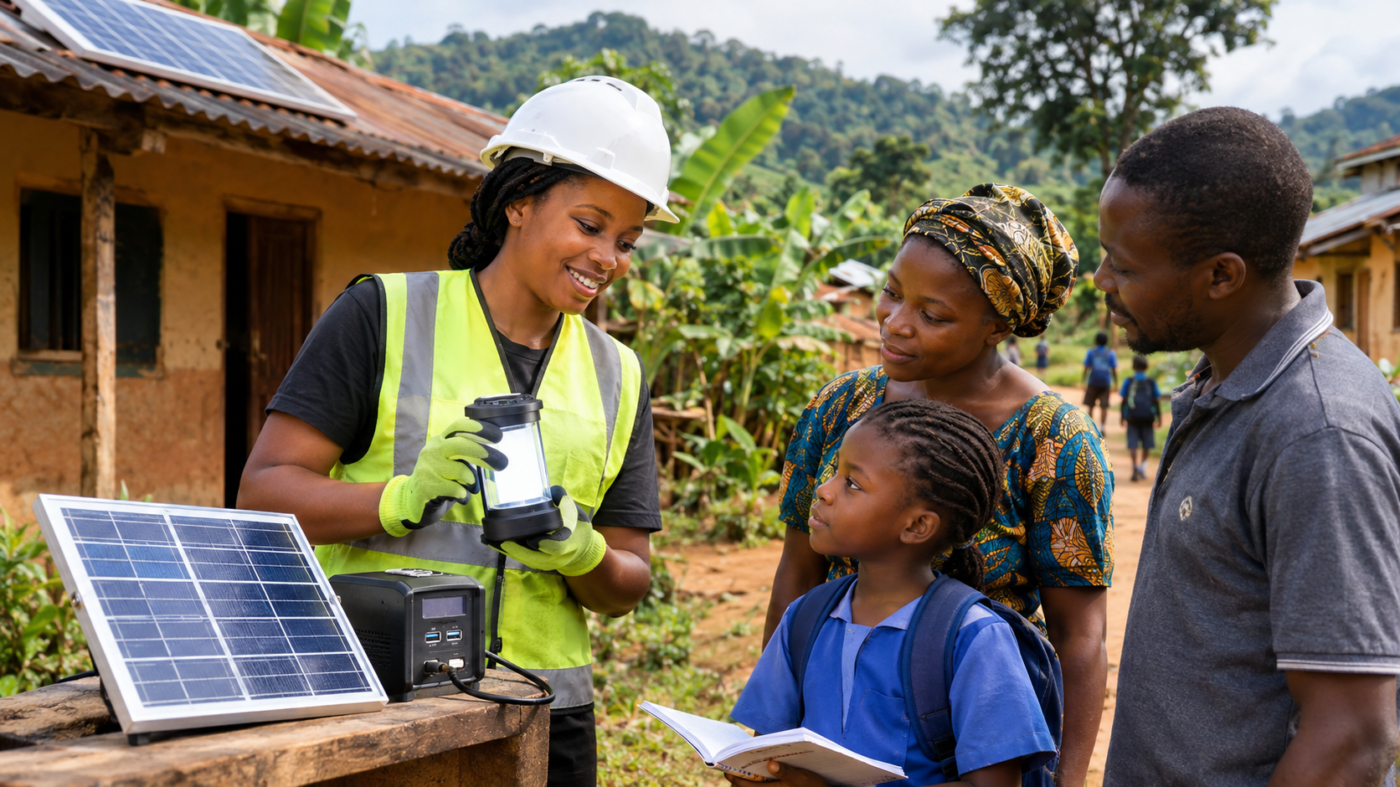
Training community members as solar ambassadors, technicians, and distribution agents helps build skills within the local economy while strengthening the connection between customers and service providers.
For rural communities, this model offers an important advantage: energy access becomes more than a transaction between a supplier and a customer. It becomes an opportunity to develop local capabilities, build trust, and create economic value within the community.
For the model to succeed, however, local agents need appropriate training, reliable products, fair commercial opportunities, technical support, and access to a sustainable supply chain.
When these elements work together, community-driven distribution can become an important pathway towards more accessible and resilient energy markets.
Greenargy: Digitizing Access to Clean Energy
At Greenargy, a Digital Energy Platform founded in 2024 by Dinga Franklin Fofung, we are working to transform how underserved rural communities discover, finance, access, and manage clean energy solutions.
Our mission is rooted in a simple belief: geography and income should not determine whether a family can access clean, reliable energy.
Having experienced the realities of energy poverty in Cameroon, our founder understands that the challenge extends beyond the availability of solar technology. Communities also need affordable purchasing options, trusted local distribution, technical support, and solutions designed around their everyday needs.
Greenargy brings these elements together through a digitally enabled, community-driven approach to energy access.
Our work focuses on several interconnected areas.
1. Digital access to clean energy products
We help customers discover and explore solar products and other clean energy solutions through our digital platform, making it easier to understand available options and identify products suited to their needs.
Our approach aims to simplify the customer journey, from discovering a product to accessing the support needed to use it effectively.
2. Flexible financing and accessible payments
The upfront cost of solar products can prevent many households and small businesses from making the transition to clean energy.
Greenargy is focused on advancing accessible purchasing options through approaches such as flexible PAYGo financing, rent-to-own arrangements, and mobile money payments, subject to product and financing availability.
By exploring alternatives to full upfront payment, we aim to help more customers overcome financial barriers and access appropriate energy solutions.
3. Community solar agents and local distribution
We believe that the future of inclusive energy access depends partly on the people who bring solutions directly to their communities.
Greenargy is advancing a community-driven distribution model that connects customers with trained solar agents who can help improve awareness, facilitate access to products, and strengthen local engagement.
Our work also supports opportunities for women to participate in the clean energy economy through technical training and community-based roles.
4. Delivery, installation, and technical support
Energy access must extend beyond the point of purchase.
Customers need dependable products, appropriate installation, and access to maintenance and after-sales support. Greenargy aims to strengthen this wider service experience so that customers can access solutions with greater confidence.
5. Expanding opportunities for underserved communities
Our vision extends beyond individual solar product sales.
We aim to strengthen the digital and community infrastructure that enables underserved populations to access clean energy, participate in local energy markets, and benefit from the economic opportunities associated with the energy transition.
By combining digital innovation with local distribution and customer-focused services, Greenargy is working towards a more accessible and connected clean energy ecosystem.
From Local Action to Lasting Impact
At Greenargy, our long-term ambition is to help expand clean energy access across underserved rural communities in Cameroon.
Our 2030 goals include distributing one million solar lamps and establishing ten additional solar distribution hubs. These ambitions reflect our commitment to improving access to clean lighting, expanding community-based distribution, supporting green employment, and exploring innovative financing solutions.
Achieving these goals will require collaboration across communities, businesses, development organizations, investors, and public institutions.
It will also require an approach that measures success by more than the number of products distributed.
We must ask whether children can study under better lighting, whether businesses can operate more effectively, whether women can access meaningful economic opportunities, and whether households can obtain reliable support when their energy systems need attention.
For Greenargy, impact means connecting technology to tangible improvements in people’s lives.
Our goal is to contribute to a future in which clean energy access is not determined by distance, income, or exclusion from traditional markets.
Why Partnerships Are Essential for Inclusive Energy Access
No single organization can solve energy poverty alone.
Achieving inclusive energy access at scale requires partnerships that combine technical expertise, financing, local knowledge, distribution capabilities, and long-term commitment.
Greenargy welcomes opportunities to collaborate with organizations that share our vision of expanding affordable, sustainable energy access.
Renewable energy manufacturers and suppliers can help improve access to reliable, suitable, and quality-assured solar products.
Financial institutions and impact investors can support the development of financing mechanisms that address the needs of low-income households, rural businesses, and underserved communities.
Development organizations and foundations can help support community energy initiatives, technical training, research, awareness, and inclusive distribution models.
Government institutions and local authorities can contribute through enabling policies, community engagement, appropriate infrastructure, and partnerships that strengthen rural energy access.
Technology partners can help improve digital systems for product discovery, customer engagement, payment coordination, distribution, and service delivery.
Community organizations and local leaders can ensure that energy initiatives respond to local priorities and reach the people most likely to be excluded.
For partnerships to deliver lasting results, they must be grounded in shared objectives, transparent implementation, local participation, and measurable outcomes.
Greenargy believes that combining digital innovation with strong partnerships and community-driven action can help create more inclusive pathways to clean energy access.
Measuring Progress Beyond Connections
Inclusive energy access should be evaluated by the difference it makes in people’s lives, not simply by the number of systems installed or products sold.
Meaningful measurement should consider several dimensions:
- Access and affordability: How many households and businesses gain access to suitable energy solutions, and can they sustain the cost?
- Reliability and service quality: Are systems functioning as intended, and can customers obtain timely maintenance and support?
- Education and well-being: Are households gaining better access to lighting and other energy services that support daily activities?
- Economic opportunity: Are local businesses, technicians, and community agents gaining skills, income, and employment opportunities?
- Gender inclusion: Are women participating meaningfully as customers, technicians, entrepreneurs, and decision-makers?
- Environmental outcomes: To what extent are clean energy solutions replacing polluting alternatives, and how are products managed at the end of their useful lives?
- Community participation: Are local people involved in shaping energy initiatives and determining which solutions best meet their needs?
Tracking these outcomes helps organizations understand what works, improve their approaches, and direct resources towards solutions that create lasting value.
It also helps build trust with communities, partners, funders, and investors.
A Shared Responsibility for a More Inclusive Energy Future
The transition to clean energy presents an opportunity to rethink not only how electricity is generated, but also who benefits from it.
A truly inclusive transition must reach beyond cities and established markets. It must recognize the needs of rural households, small businesses, schools, healthcare facilities, women entrepreneurs, and communities that have historically faced barriers to reliable electricity.
This requires affordable technologies, appropriate financing, strong distribution networks, local technical skills, responsible environmental practices, and digital systems that make energy solutions easier to access.
It also requires a shift in perspective: underserved communities should not be viewed only as recipients of assistance, but as active participants in building the clean energy economy.
At Greenargy, we are committed to contributing to this future by digitizing access to clean energy and connecting communities to appropriate solutions through innovation, flexible financing approaches, and community-driven distribution.
We recognize that the challenge is significant and that lasting progress depends on collaboration. But every improvement in access, every local technician trained, every household connected to a suitable clean energy solution, and every partnership that removes a barrier brings us closer to a more equitable energy future.
Inclusive energy access is not simply about bringing electricity to more people. It is about ensuring that everyone has a fair opportunity to benefit from the social, economic, and environmental progress that energy makes possible.
Join Greenargy in Advancing Inclusive Energy Access
Are you a renewable energy provider, development organization, investor, technology partner, or community leader committed to expanding clean energy access?
Greenargy welcomes partnerships that help bring affordable, reliable, and sustainable energy solutions to underserved communities across Cameroon and beyond.
Together, we can strengthen local distribution networks, advance accessible financing, support green jobs, and develop innovative approaches that bring clean energy closer to the people who need it most.
Greenargy — A Digital Energy Platform.
Digitizing Access to Clean Energy. Get In Touch
